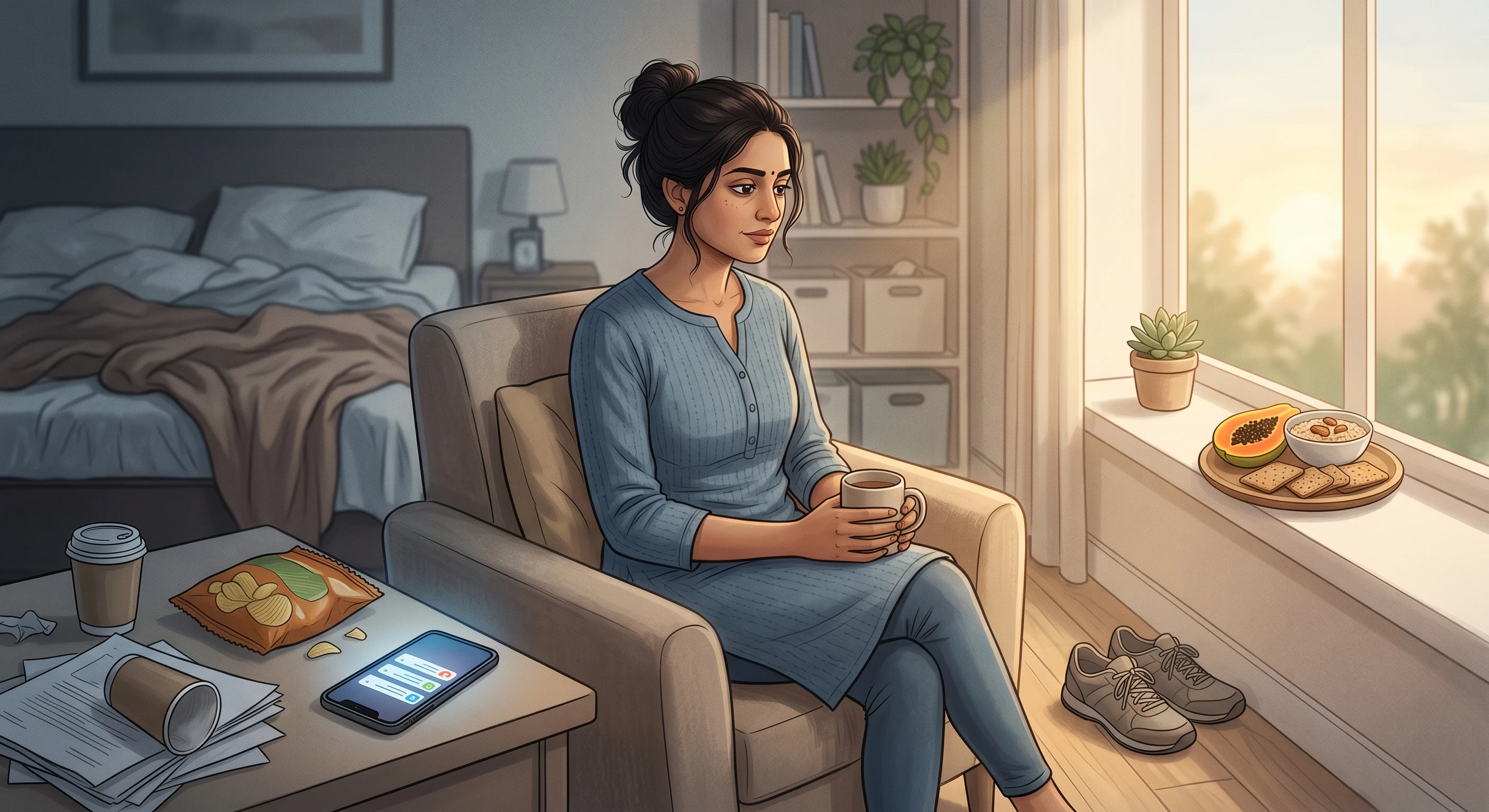
PCOS in Modern Lifestyle: Why It’s Rising & How to Reverse It Naturally
Mamta Gupta
PCOS is rising due to modern lifestyle habits like stress, poor diet, low activity, and bad sleep. This blog explains how these disrupt hormones and shares simple, science-backed lifestyle changes to naturally manage and improve PCOS.
I still remember the day my doctor told me, “You have PCOS.”
At first, I thought — okay, this is just another health issue. I’ll take medicine and it’ll go away.
But weeks passed… then months.
Nothing really changed.
That’s when I stopped asking,
👉 “What medicine should I take?”
and started asking,
👉 “Why is this happening to my body?”
When I Looked Honestly at My Lifestyle…
I realized something uncomfortable.
I was stressed most of the time (even when I didn’t admit it)
My food was quick, processed, and inconsistent
I barely moved during the day
My sleep schedule was a mess
None of these felt “serious.”
But together?
👉 They were quietly disturbing my hormones every single day.
What Science Actually Says About PCOS
When I started reading research, one thing became very clear:
👉 PCOS is not just an ovary problem.
👉 It’s deeply connected to insulin resistance and lifestyle.
A major scientific review explains that insulin resistance is one of the main drivers of PCOS, affecting hormone balance and ovulation. (Springer)
That means:
Your body struggles to use sugar properly
Insulin levels increase
This triggers hormonal imbalance
And suddenly, everything makes sense:
Weight gain
Acne
Irregular periods
They’re not random. They’re connected.
Why PCOS Is Increasing So Fast Today
Then I asked myself something simple:
👉 If this is biological, why are so many more women facing it now?
The answer is uncomfortable but real:
👉 Our lifestyle changed faster than our body could adapt.
1. Stress Is Constant Now
Even when we’re sitting still, our mind isn’t.
Deadlines, comparison, overthinking.
Your body thinks you’re in danger — all the time.
This keeps stress hormones high, which disrupts reproductive hormones.
2. Food Is Energy-Dense but Nutrient-Poor
I used to think, “I’m eating enough.”
But I wasn’t eating right.
Research shows that diet changes can significantly improve insulin resistance and body composition in women with PCOS. (PubMed)
Which means:
👉 Food is not just calories — it’s hormonal information.
3. Movement Is Missing
This was the biggest wake-up call for me.
I thought workouts were optional.
But research shows something powerful:
👉 Regular exercise can reduce insulin levels, body fat, and improve hormonal markers in PCOS. (PubMed)
Even more interesting?
Studies also show that higher physical activity is directly linked to lower insulin resistance in women with PCOS. (PMC)
That means movement is not about fitness.
👉 It’s about fixing the root problem.
4. Sleep Is the Hidden Factor
No one told me this early enough.
But poor sleep = worse hormones.
When your sleep cycle is broken:
Stress increases
Insulin worsens
Hormones lose rhythm
The Turning Point for Me
At one point, I was tired of searching for shortcuts.
And I realized:
👉 There is no quick fix for PCOS.
👉 But there is a natural way to support your body.
So I stopped doing extreme things.
And started doing simple things consistently.
What Actually Helped Me (Backed by Science + Experience)
🌅 I Fixed My Daily Rhythm First
Same wake-up time
Morning sunlight
No phone immediately
This helped stabilize my internal clock.
🥗 I Focused on Balanced Eating (Not Dieting)
Instead of starving or following trends, I focused on:
Protein in every meal
More whole foods
Less sugar and processed food
Because research clearly shows:
👉 Improving diet improves insulin — which improves PCOS. (PubMed)
🚶 I Made Movement Non-Negotiable
No extreme workouts.
Just:
Walking daily
Simple strength exercises
Because studies consistently show:
👉 Exercise improves insulin sensitivity, body composition, and hormone health in PCOS. (PubMed)
😴 I Took Sleep Seriously
This was hard, but worth it.
Once I fixed my sleep:
My mood improved
My cravings reduced
My energy became stable
🧠 I Learned to Manage Stress (Not Ignore It)
I stopped pretending I wasn’t stressed.
Instead, I:
Took breaks
Reduced screen time
Spent time doing slow, calming things
What I Wish Someone Told Me Earlier
If you’re dealing with PCOS, please understand this:
👉 Your body is not working against you.
👉 It’s reacting to your lifestyle.
And the best part?
👉 That means you have the power to influence it.
Final Thought
PCOS didn’t teach me how to “fix my body.”
It taught me how to understand it.
And once I started supporting my body instead of fighting it…
Things slowly started improving.
Not instantly.
Not perfectly.
But steadily.
And honestly?
That’s enough.